Warning Signs Your Solar System Needs Maintenance
A solar system rarely fails all at once, it usually gives warning signs first. Here’s what to watch for, what actually breaks most often, and what to do about it before a small issue becomes a full breakdown.
Why Maintenance Matters (Even Though Solar Is Known for Being “Low-Maintenance”)
Solar has a reputation as a system you install and then forget about. That’s largely true compared to a generator, but “low-maintenance” doesn’t mean “no monitoring.” Catching a warning sign early is often the difference between a minor repair and a full battery or inverter replacement.
The 3 Warning Signs to Watch For
Three concrete signals are worth watching for, regardless of your system’s age:
- Charging noticeably slower than usual, the battery takes longer to reach full charge.
- Alarms or warning lights coming on at the inverter.
- Unexpected shutdowns or power drops that aren’t weather-related.
What Actually Fails Most Often (and Why Geography Matters Here)
A field study of 262 solar users in Kenya ,not Nigeria, an important distinction explained below, gives a sense of what actually breaks most often in practice: the battery is by far the leading point of failure, followed by switches (about 6.5% of reported failures) and water damage (about 4.6%). One habit also stood out as a compounding factor in that study: “daily installation” moving the panel every day instead of mounting it permanently, wears the system down faster.
Those figures come from Kenya, not Nigeria, and that distinction isn’t a minor footnote: usage patterns, climate, and equipment aren’t identical from one country to another. They offer a useful indication of typical weak points in a residential solar system across Sub-Saharan Africa, not a Nigeria-specific statistic. Nigeria has its own track record here: it’s one of 11 countries covered by the Lighting Africa program as far back as 2018, and informal repair of electronics is documented as a common, culturally embedded practice there which makes it that much more useful to recognize a warning sign early, before having to look for an improvised fix.
Everyday Habits That Wear a System Down Faster
Beyond the failures themselves, certain habits speed up wear on a system, in Nigeria or anywhere else:
- Moving the panel daily instead of installing it in a fixed position.
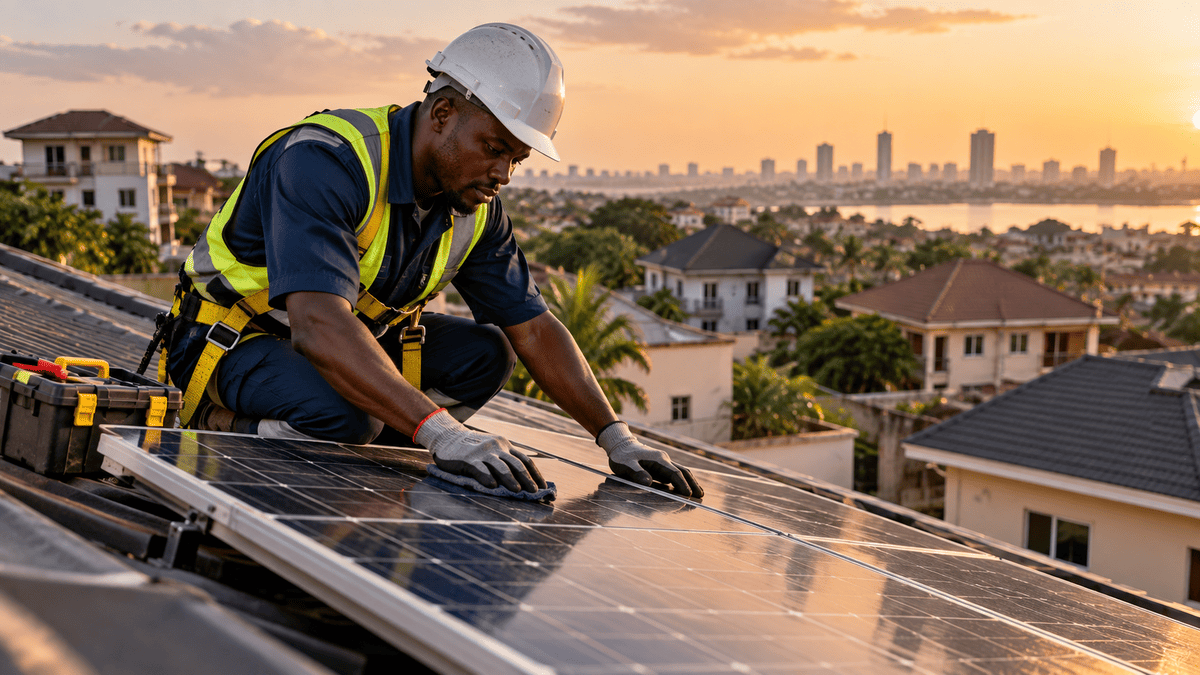
- Letting dust build up on the panel surface without regular cleaning.
- Exposing electrical components to water — direct rain on unprotected connections, water ingress.
- Overlooking pest damage — rodents chewing through cables, insects nesting in enclosures.
- Repeated physical shocks and impacts, from transport, handling, or an unstable mount.
A Note on Inverter Low-Voltage Issues
An inverter flagging a low-voltage warning is a different kind of case: it’s an electrical issue that touches directly on safety, not something to diagnose or repair yourself. If your inverter shows this type of alert, the right response is to bring in a qualified technician for an inspection — not to attempt an improvised fix. This guide deliberately doesn’t detail any repair steps for that reason.
What to Do When You Notice a Warning Sign
As soon as one of the three signals above shows up, the priority is getting the system inspected by a professional rather than waiting for the problem to get worse. If a failure happens unusually early after purchase, it’s also worth asking whether the original equipment was properly certified — an early failure sometimes goes hand in hand with a poorly sourced purchase.