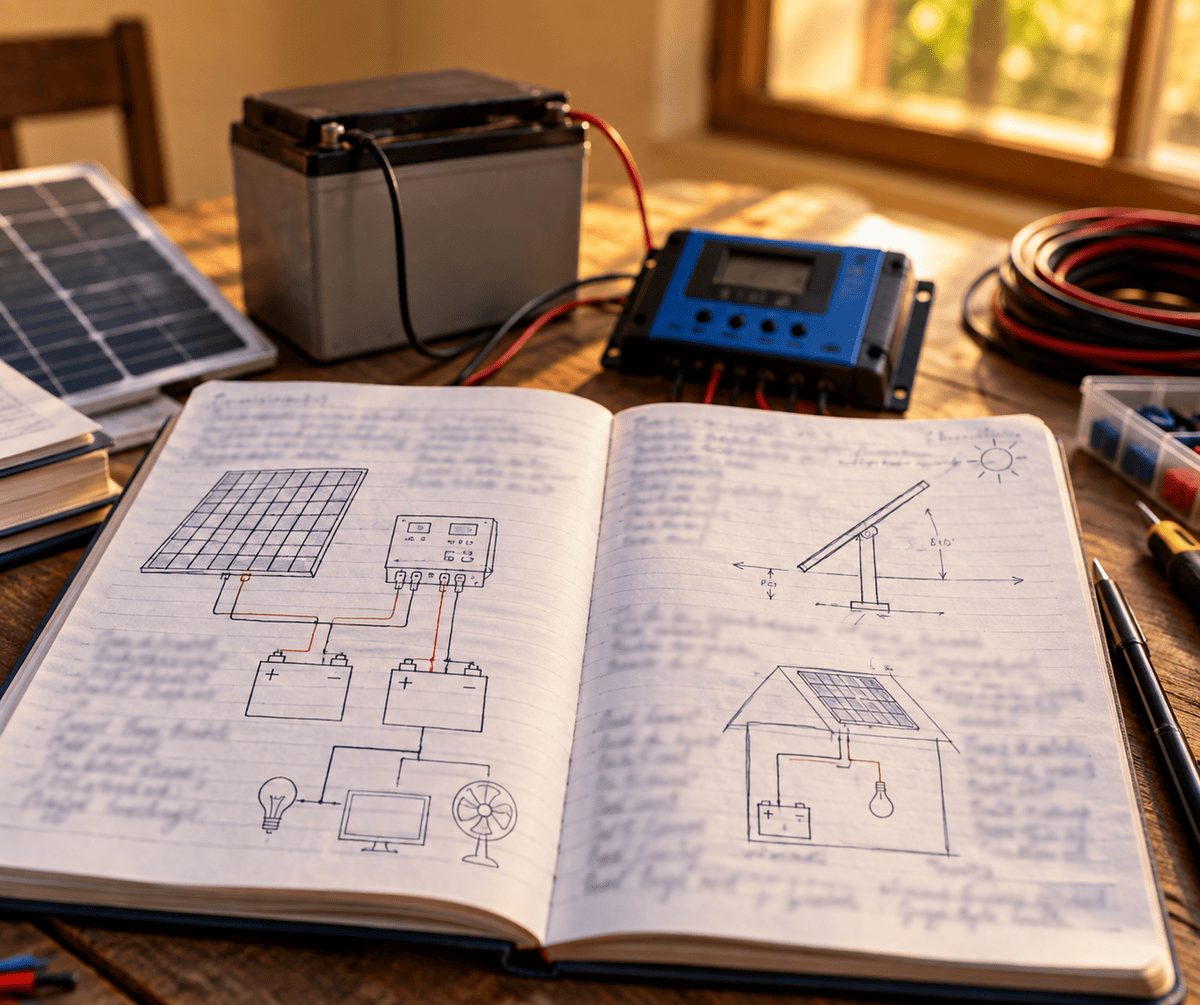
Solar Energy Glossary: Terms Explained for Nigerian Homeowners
This glossary explains the solar terms you’ll actually run into while shopping for a system in Nigeria — in plain English, grouped by what they’re used for.
Sizing and Power Basics
- kVA (kilovolt-amp) — measures a solar inverter’s total power capacity. Most residential systems in Nigeria range from 1kVA to 10kVA depending on household needs. See how to size a solar system
- kW (kilowatt) — measures the actual power being drawn or produced at a given moment. Rarely used alone in Nigerian listings — almost always paired with a kVA figure.
- kWh (kilowatt-hour) — measures a quantity of energy used or stored over time. Used to describe a household’s daily consumption or a battery’s storage capacity.
- kWp (kilowatt-peak) — measures the maximum output a panel array can produce under ideal sunlight. Often used interchangeably with panel wattage in local listings.
- Backup hours — how long a battery can power your home before it needs to recharge. Depends directly on system size and the appliances connected.
System Types
- Off-grid solar system — runs entirely independent of the national grid.
- On-grid solar system — stays connected to the national grid and can feed power back into it.
- Hybrid solar system — combines a grid connection with battery backup. See on-grid vs off-grid vs hybrid solar systems
- Mini-grid — a small independent local grid serving multiple homes or a community. In Nigeria, this type of setup falls under NERC’s mini-grid regulation
- SHS (Solar Home System) — a compact, standalone solar kit sized for one household’s basic needs. A common format for pay-as-you-go offers.
Core Components
- Solar panel (module) — converts sunlight into electricity.
- Inverter — converts DC power from panels or batteries into the AC power your appliances use.
- Pure sine wave inverter — an inverter type that produces clean power, safe for sensitive electronics. See pure sine wave vs modified sine wave inverters
- Modified sine wave inverter — a cheaper inverter type that’s less compatible with some appliances.
- Battery — stores electricity for use when the sun isn’t shining.
- Charge controller — regulates the flow of power between the panels and the battery, preventing overcharging.
- MPPT (Maximum Power Point Tracking) — a more efficient type of charge controller. See MPPT vs PWM charge controllers
- PWM (Pulse Width Modulation) — a simpler, less efficient type of charge controller.
Battery Chemistry and Specs
- Lithium-ion / LiFePO4 — a battery chemistry known for a longer lifespan and lighter weight. See lithium vs lead-acid batteries
- Lead-acid / AGM / gel — an older, cheaper battery chemistry.
- Ah (amp-hour) — measures a battery’s storage capacity. Used to compare batteries of the same chemistry.
- DoD (Depth of Discharge) — how much of a battery’s capacity can safely be used before recharging. Directly affects how much usable backup you actually get day to day.
Buying and Business Terms
- Installer / EPC (Engineering, Procurement and Construction) — the company that designs and installs your system. In Nigeria, the choice comes down mostly to service area and reliability, not just the price quoted.
- PAYGo (Pay-As-You-Go) — a payment model where customers pay in installments via mobile money instead of the full amount upfront.
Certification and Regulation
- SONCAP — the certification program that imported electrical equipment must pass to be sold in Nigeria, including solar panels, inverters, and batteries. See solar regulation in Nigeria
- NERC (Nigerian Electricity Regulatory Commission) — the body that regulates Nigeria’s electricity sector, including solar mini-grids.
- REA (Rural Electrification Agency) — the agency running Nigeria’s national rural electrification and mini-grid program, largely through solar.